About Luke Patrick
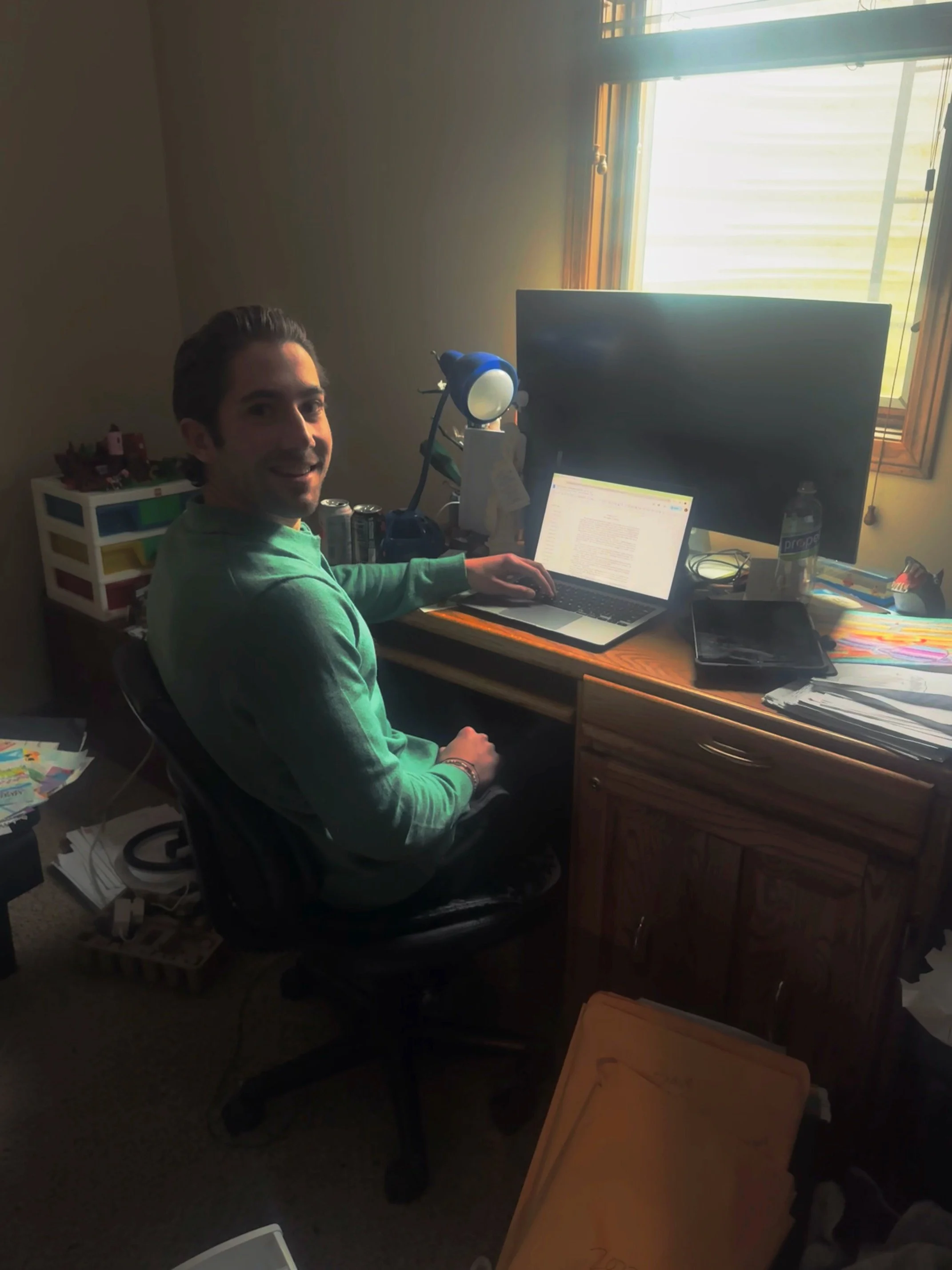
Epic stories tend to start in quiet corners. My writing has lived in many places, a desk squeezed into a toy room, library study spaces with tall windows, whatever quiet seat I could claim while finishing school abroad, and right now, a classroom in Thailand where I teach English and watch the world remind me daily that everything is connected.
I studied elementary education and international studies, which shaped how I think about stories and the people who read them. I care deeply about clarity, rhythm, and the responsibility that comes with telling a story someone might carry long after they close the book. Words travel farther than we expect.
I believe nature is sacred, that divinity lives in the elements, and that we are spirits choosing our own path through a world that is very much alive. That belief is not separate from my writing. It is my writing. The Septenary Saga was born from it, seven kingdoms each shaped by a natural force, each asking its people what they owe the world that made them.
I am drawn to outsiders and underdogs, to characters who would rather do the right thing quietly than be remembered loudly. I love fantasy that treats wonder seriously, that uses myth to make the world clearer instead of softer, and that lets hope be something chosen rather than guaranteed.
The places change. The habit stays.
Epic stories tend to start in quiet corners. My writing has lived in many places, a desk squeezed into a toy room, library study spaces with tall windows, whatever quiet seat I could claim while finishing school abroad, and right now, a classroom in Thailand where I teach English and watch the world remind me daily that everything is connected.
I studied elementary education and international studies, which shaped how I think about stories and the people who read them. I care deeply about clarity, rhythm, and the responsibility that comes with telling a story someone might carry long after they close the book. Words travel farther than we expect.
I believe nature is sacred, that divinity lives in the elements, and that we are spirits choosing our own path through a world that is very much alive. That belief is not separate from my writing. It is my writing. The Septenary Saga was born from it, seven kingdoms each shaped by a natural force, each asking its people what they owe the world that made them.
I am drawn to outsiders and underdogs, to characters who would rather do the right thing quietly than be remembered loudly. I love fantasy that treats wonder seriously, that uses myth to make the world clearer instead of softer, and that lets hope be something chosen rather than guaranteed.
The places change. The habit stays.